



Changbai Mountain & Jingpo Lake 8-Day Tour
8 Days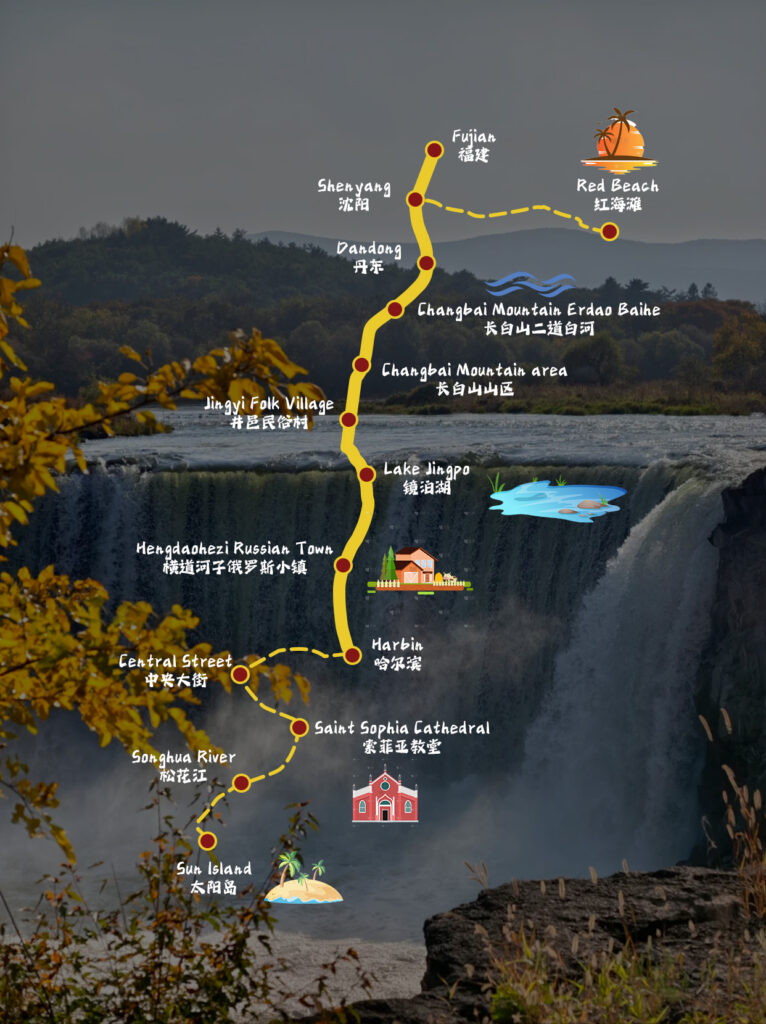
Included/Exclude
Cost Includes
- Pick and Drop Services
- Meals Included in the Itinerary
- Travel Insurance
- Admission Tickets
- Tour Guide Service
- Provide free drone photography service
- 4-Diamond Comfort Hotel
Cost Excludes
- Chinese Visa
- Flight Tickets
- Single Room Supplement
- Meals Not Specified in the Itinerary
Trip Info
-
4 Star Hotel
-
Availability
-
Availabe
-
2691m
-
Bilingual Tour Guide
-
Chinese, English
-
VISA, Master Card
-
Private Chauffeur Car for Travel
-
Hotel
-
Available
Why go?
From the fiery red of Panjin Red Beach, we venture into the snowy landscapes of Changbai Mountain, soak in the gentle waves of Jingpo Lake, and finally wrap ourselves in Harbin’s Russian-style charm — gathering all the passion, crispness and romance of Northeast China into this journey.
Tour Highlights
- Holiday with friends & family.
- As many activities & excursions as can be fitted in to your trip.
- Go any day of the week and most times of the year.
Tour Plan
Upon arrival in Harbin, you will be met by our tour guide and transferred to the hotel for check-in.
English Translation (Tour Itinerary Style)
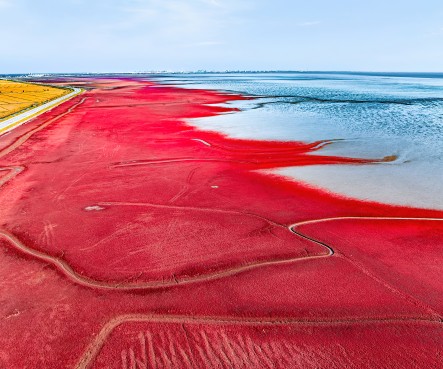
After breakfast, proceed to Red Beach National Scenic Corridor — one of China’s Top 10 Charming Wetland Cities and a premier destination for self-driving tours.
Nestled at the estuary of the Liaohe River, this scenic corridor boasts a striking red coastline. Officially designated as a National 5A-Level Scenic Area by the Ministry of Culture and Tourism in January 2020, it has garnered numerous accolades, including "National Ecotourism Demonstration Area," "National Top Sports Tourism Scenic Spot," "National Wetland Tourism Demonstration Base," and "Liaoning Provincial Famous Brand Demonstration Zone."
The core wetland within the scenic area maintains intact primeval ecology, holding significant ecological value. It is listed on the Ramsar List of Wetlands of International Importance and has joined the "East Asian-Australasian Flyway Site Network" and the "Northeast Asian Crane Network." The fiery red suaeda salsa, vast emerald reeds, and endless rice fields together create a breathtaking ecological artwork spanning sky and earth. As one of China’s Top 10 Charming Wetlands, it serves as a habitat for rare species such as red-crowned cranes (the "fairies of wetlands") and spotted seals (the "spirits of the sea"), embodying the cultural heritage and historical legacy of the Liaohe River Estuary.
With wetlands as its backdrop, the scenic area showcases "Four Seasons of Red Beach." In spring, migratory birds return in flocks, crisscrossed waterways weave through lush green reeds and vibrant red suaeda salsa, making it a paradise for migratory birds to migrate, rest, and breed.
Later, return to Shenyang for accommodation.
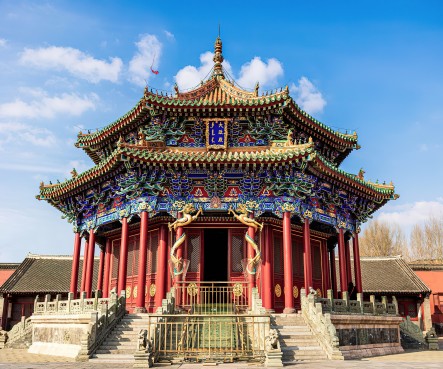
After breakfast, proceed to [Mukden Palace (Shenyang Imperial Palace)]. Located in Shenhe District, Shenyang, it is one of the two well-preserved imperial palace complexes remaining in China. Originally serving as the imperial palace of the Later Jin Dynasty before its entry into the Shanhai Pass, it later became the Shengjing Temporary Palace (also known as Fengtian Temporary Palace) after the Qing Dynasty moved its capital to Beijing. The Mukden Palace Museum is renowned at home and abroad not only for its exquisite ancient imperial architecture but also for its rich collection of precious cultural relics. Housing a large number of court artifacts handed down from the former imperial palace, these treasures are on display in various exhibition halls throughout the palace.Mukden Palace (Shenyang Imperial PalaceDivided into three sections based on architectural layout and construction timeline:East Section: Features the Dazheng Hall (Hall of Great Politics) and Ten Princes' Pavilions, erected during Nurhaci's reign.Middle Section: Comprises the Central Axis Complex, extended under Emperor Taizong of the Qing Dynasty, including the Daqing Gate (Gate of Great Qing), Chongzheng Hall (Hall of Martial Prowess), Fenghuang Tower (Phoenix Tower), and imperial chambers such as Qingning Palace, Guanjü Palace, Yanqing Palace, and Yongfu Palace.West Section: Includes the Wensu Pavilion (Pavilion of Literary Trace) and other structures added in Emperor Qianlong's era.The entire palace complex is adorned with towering pavilions, majestic halls, intricately carved beams, and painted rafters, exuding unparalleled grandeur and opulence.
[Zhang Xueliang's Former Residence] First constructed in 1914, covering an area of 53,000 square meters, this national key cultural relic protection unit consists of multiple heritage buildings, including a three-courtyard quadrangle, the Grand Blue Mansion, the Small Blue Mansion, Guandi Temple, the Red Building Group, Zhao Yidi's Former Residence, the former site of Bianye Bank, and its office.Currently, two museums operate within the complex:Zhang Xueliang's Former Residence Exhibition Hall: Encompasses the three-courtyard quadrangle, Grand Blue Mansion, Small Blue Mansion, Guandi Temple, and Zhao Yidi's Former Residence.Shenyang Financial Museum (housed in the former Bianye Bank): Showcases restored displays of the original trading hall, president's office, and underground vault, as well as permanent exhibitions on the history of Northeast China's finance and the story of currency. It comprehensively presents Bianye Bank's legacy, a brief history of Northeast China's financial development, and the evolution of monetary finance.
[Dandong Yalu River Cruise] Sailing on the Yalu River in Dandong, with Sinuiju City of North Korea visible across the river. This cruise not only offers views of the Yalu River Broken Bridge—a silent witness to the War to Resist U.S. Aggression and Aid Korea—but also provides a close-up glimpse of North Korea's mysterious scenery.
[Yalu River Broken Bridge] Spanning the Yalu River, this broken bridge is one of Dandong's iconic attractions. Adjacent to the Yalu River Bridge (Sino-North Korean Friendship Bridge), it stands as a profound historical relic of the War to Resist U.S. Aggression and Aid Korea. Walking on its deck, visitors can see countless bullet holes and scarred steel frames, evoking the echoes of gunfire and warplanes piercing the sky. The bridge also offers a panoramic view of the riverbanks of both China and North Korea.Originally the first bridge over the Yalu River, it was built in 1911 by the Railway Bureau of Japan's Government-General of Korea, a colonial authority at the time. With a total length of 944.2 meters, its 4th span from the Chinese side was a rotating section that could swivel 90 degrees around an axis to allow ship navigation. From November 1950 to February 1951, U.S. military aircraft repeatedly bombed the bridge, rendering it inoperable.The remaining four spans on the Chinese side have been preserved and are commonly known as the "Broken Bridge." Today, it features two observation decks (at the original rotating section and the bombed gap), one watchtower, and 30 exhibition panels detailing its history. Painted light blue, the bridge symbolizes remembrance of colonial rule and war, as well as aspirations for world peace. The thousands of well-preserved bullet holes serve as enduring testimonies to the War to Resist U.S. Aggression and Aid Korea.
Proceed to Dandong and check into the hotel.
[Baihua Valley Korean Ancient Village (Changbai Mountain)]Located in Songjiang Town, Antu County, Yanbian Korean Autonomous Prefecture, Jilin Province, this 3A-level scenic area is approximately 40 kilometers away from Changbai Mountain Scenic Area. Integrating ecotourism, folk custom experience, and leisure health preservation, the ancient village features a Korean Folk Custom Museum, an Intangible Cultural Heritage Exhibition Hall, traditional food experience workshops, and homestays. Here, visitors can deeply immerse themselves in the century-old history and culture of the Korean ethnic group, taste authentic local cuisine, and admire unique ethnic customs. Boasting a beautiful natural environment and profound cultural heritage, it has become a highly popular attraction at the foot of Changbai Mountain.
[Changbai Mountain Beauty Pine Sky Corridor ParkA]charming small park where wild ducks in the lake chase and play leisurely. Nestled in Erdaobaihe Town, a tourist-focused destination, it offers a refreshing escape to savor the cool breeze and tranquil moments during your journey.
[Wetland Flower SeaBoasting ]over 10 species of wetland flowers, including sunflowers, Chinese pinks, irises, cosmos, spider flowers, sulfur cosmos, and globe amaranths, the area features rich color gradients and distinct landscapes across seasons—with summer being the prime blooming period. Centered on freshwater lake wetland restoration and bird habitat reconstruction, it integrates wetland conservation with ecotourism functions, hailed as a microcosm of "the Earth’s kidneys."
► Later, check into a hotel in Erdaobaihe Town.
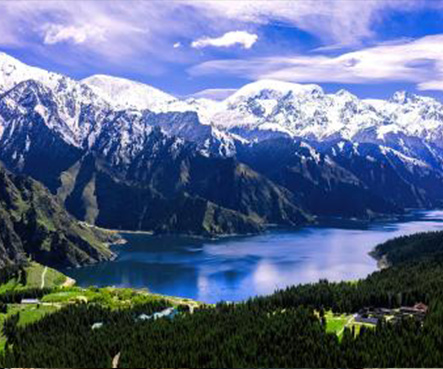
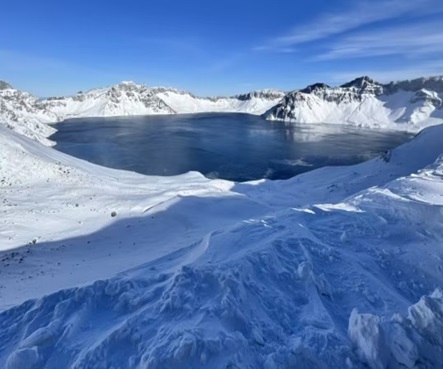
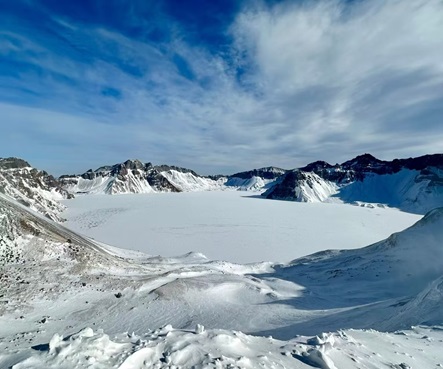
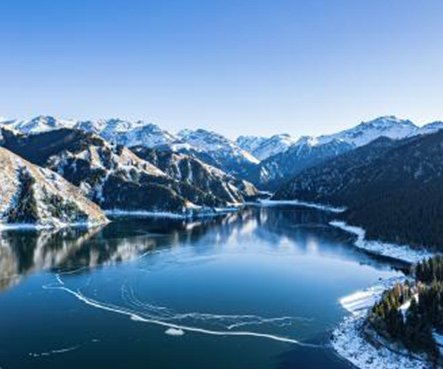
After breakfast, proceed to visit Changbai Mountain North Scenic Area. Known as the North Slope Scenic Area, the region north of Tianchi Lake boasts more attractions than the West and South Slopes, though it also draws larger crowds. Iconic geological wonders here include Changbai Waterfall, Julong Hot Springs, and the Primeval Forest in the Valley. You can also take a shuttle bus to experience thrilling sharp turns before overlooking the stunning Tianchi Lake from the rugged main peak.Admire the Changbai Mountain Tianchi Lake with its polar-like scenery—standing atop the mountain, the frozen lake shimmers like a precious mirror inlaid on the peak. Board an eco-friendly bus from the transfer center directly to the Waterfall Parking Lot, then walk along the plank road to see Changbai Waterfall (the world’s largest drop waterfall) and Julong Hot Spring Group (where water temperature remains constant year-round). Scattered among the snow-covered mountains and forests, dozens of steaming hot springs create a striking contrast of ice and fire. Rich in trace elements like hydrogen sulfide, the springs display magnificent colorful hues. Unique treats such as hot spring-boiled eggs and corn are available for purchase.A 5-minute eco-bus ride from the Waterfall Parking Lot leads to Little Tianchi Lake, a serene body of water reflecting the elegant silhouettes of surrounding trees. After a short stay, retrace your steps along the plank road, where you’ll witness the Erdaobai River rushing through a narrow canyon. A 15-minute walk brings you to Lvyuan Pond, a paradise of emerald green waters. Here, you’ll be captivated by splashing ice waterfalls and the pond’s mysterious tranquility—truly a breathtaking fairyland!A private vehicle will transfer you to Erdaobaihe Town, nestled at the foot of Changbai Mountain. Boasting abundant forest resources, the town is located in southeastern Jilin Province, adjacent to North Korea in the southeast. Situated on the North Slope of Changbai Mountain, it is renowned as "the First Town at the Foot of Changbai Mountain."
Later, proceed to Dunhua and check into the hotel.
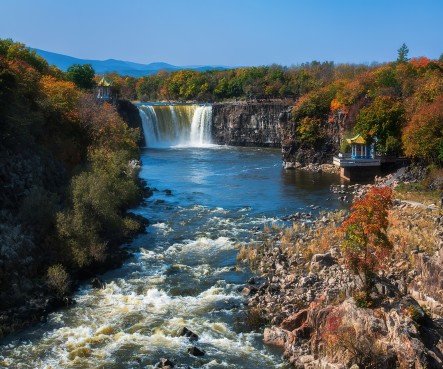
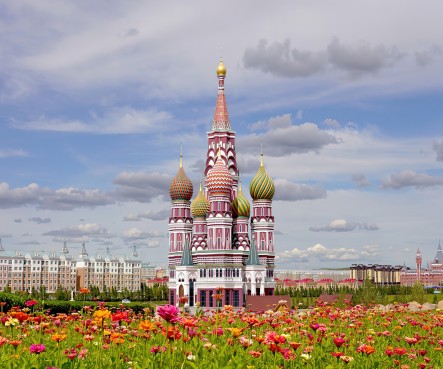
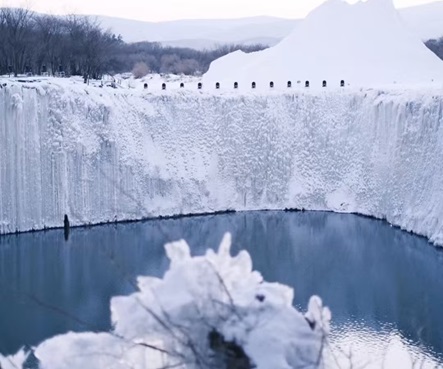
After breakfast, visit Jingpo Lake Scenic Area, the world's largest alpine lava barrier lake and a national 5A-level scenic spot. Known as the "West Lake of the North", it is a renowned summer resort. To enter the scenic area, you need to take a sightseeing bus to visit Jingpohu Diaoshuilou Pubu—China's largest lava gas cave collapse-type waterfall and one of the eight natural landscapes of Jingpo Lake. You can also explore the 10,000-year-old river valley landscape formed by volcanic eruptions over 10,000 years ago, and freely visit Black Dragon Pool, Waterfall Viewing Pavilion, Hongluo Nv Cultural Park, and Bohai Garden. On land, you can take photos with Deng Xiaoping's inscription "Jingpo Scenic Beauty" as a souvenir.In the afternoon, take a bus to Hengdaohezi and visit Hengdaohezi Russian Town—a charming town brimming with Russian flair. In 1897, when the Russians constructed the Harbin-Suifenhe section of the Chinese Eastern Railway, this town emerged as a vital transportation hub connecting Mudanjiang and Harbin, transforming from an obscure village into a bustling settlement. Founded one year earlier than Harbin City itself, it boasts 256 Russian-style buildings, with over 50 still well-preserved. These structures stand as typical representatives of Russian architecture and form one of China’s most iconic Russian Building Complexes.With a long historical and cultural heritage, Hengdaohezi served as a key location for military and administrative institutions from the era of Russian management of the Chinese Eastern Railway through the Japanese puppet period. Many outsiders built villas, apartments, factories, and businesses here, attracting merchants from all over and earning the town the reputation of a "Garden Town" with its rows of buildings. Today, it retains numerous historical relics and boasts beautiful scenery, featuring attractions such as the Old Railway Garage, Orthodox Church, Railway Station, and Oil Painting Village.
► Later, return to Harbin and check into the hotel.
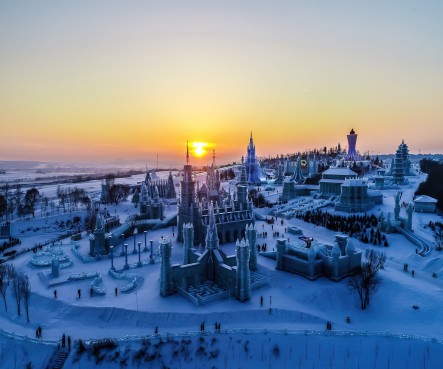
Later proceed to [Central Street]. A visit here wouldn’t be complete without trying authentic Russian cuisine and the world-famous Mardel (Mardel Ice Cream Bar). With a history of over 100 years, this commercial street features a stunning collection of classic European-style buildings and is lined with various department stores. When night falls, the street is illuminated by colorful lights, creating a dazzling atmosphere—making it a must-visit destination in Harbin.Stretching north from the Flood Control Monument on the banks of the Songhua River to Jingwei Street, this pedestrian street is paved with cobblestones. Flanking both sides are numerous European-style buildings in Renaissance, Baroque, and other architectural styles, exuding romance at every turn. During the Ice and Snow Festival, interesting ice sculptures and snow sculptures can be seen everywhere along the street, inviting you to take photos with them.Central Street’s large department stores always attract countless shopping enthusiasts. Renowned Russian restaurants such as Huamei Western Restaurant and Portman Western Restaurant, along with the delicious Mardel Ice Cream Bar, are the main reasons many tourists visit. Additionally, there are specialty stores selling Russian crafts, Qiulin Food, and more.
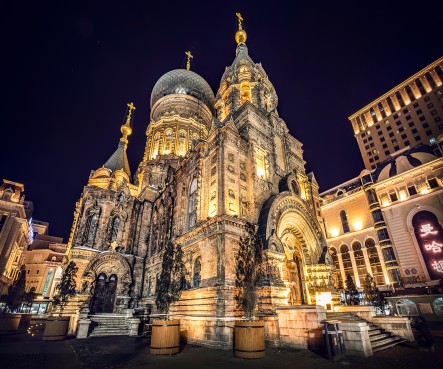
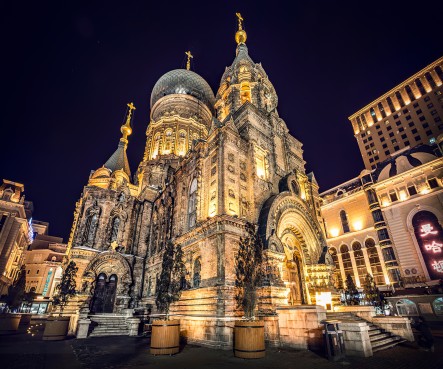
[Saint Sophia Cathedral] First constructed in 1907, it is one of China’s best-preserved Byzantine-style buildings. Officially renamed "Harbin Architectural Art Museum" in 1997, it is still widely known as "Sophia Cathedral" among both locals and tourists. The most striking feature of the cathedral is its grand, bulbous onion dome—a typical Russian architectural element that stands majestically, comparable to Moscow’s St. Basil’s Cathedral. Built with red brick (exposed brick finish), the cathedral is surrounded by four smaller tent-shaped domes of varying sizes. Staircases connect the floors beneath these domes, and the entire structure is accessible via four entrances (front, back, left, and right).
[Flood Control Victory Monument ]Designed and built in 1958 by renowned Harbin architect Li Guangyao, this monument commemorates the people of Harbin for overcoming the catastrophic floods of 1957. Composed of a 13-meter-high cylindrical tower and a 7-meter-high semicircular colonnade, it presents an imposing sight. The relief carvings on the tower vividly depict the flood-fighting efforts, while the sculpture of workers, peasants, and soldiers atop the tower embodies the heroic spirit of overcoming the disaster.
[Stalin ParkA] popular summer resort along the Songhua River, Stalin Park faces Sun Island across the river. Established in 1953, it was originally named "Riverbank Park." Stretching 1,750 meters in length, this belt-shaped open park is built along the river embankment. Centered around the Flood Control Victory Monument, it is renowned at home and abroad for its Russian classical-style buildings, colorful grass flower beds scattered throughout the park, and 16 groups of artistic sculptures such as "Swan Spreading Wings," "Three Boys," "Taking Off," "Diving," and "Sword Dancing"—all nestled among the greenery.
[Binzhou Railway Bridge] For nearly 113 years, thundering trains have raced across this bridge—almost as old as Harbin itself. In a sense, the location of this bridge determined the current site of Harbin. Known as the Binzhou Railway Bridge over the Songhua River (also called the Harbin Songhua River Bridge of the Chinese Eastern Railway), this cross-river structure is a vital section of the Trans-Eurasian Chinese Eastern Railway, connecting Harbin to Manzhouli. It is the earliest railway bridge on the Songhua River and Harbin’s first bridge spanning the river.
[Sun Island Scenic Area]Located on the north bank of the Songhua River in Harbin, Sun Island Scenic Area is a national-level scenic spot and 5A-level tourist attraction, hailed as Harbin’s "city card." With lush green trees and fragrant flowers in summer, it is an ideal destination for escaping the heat. You can admire the lake and mountain scenery at Shuige Yuntian (Pavilion by the Water), interact with cute squirrels on Squirrel Island, watch elegant black swans on Swan Lake, or feel the coolness and grandeur of Sun Waterfall.
► Later, proceed to Harbin and check into the hotel.
Transfer to the airport according to your flight schedule.
Included/Exclude
Cost Includes
- Pick and Drop Services
- Meals Included in the Itinerary
- Travel Insurance
- Admission Tickets
- Tour Guide Service
- Provide free drone photography service
- 4-Diamond Comfort Hotel
Cost Excludes
- Chinese Visa
- Flight Tickets
- Single Room Supplement
- Meals Not Specified in the Itinerary
Frequently Asked Questions
We will offer you the most favorable price based on your itinerary and destination! Whether it’s an impromptu short-distance getaway nearby, a long-haul in-depth tour across mountains and seas, a family-friendly vacation with your loved ones, or a team-building trip with your colleagues, we will provide a precise quote tailored to your unique needs. We reject hidden costs and tricky discount schemes, and with transparent pricing and premium services, we help you fulfill a cost-effective travel dream.
From the moment you inquire about the itinerary until the successful conclusion of your journey, our professional team will be dedicated to providing you with the highest-quality service. Whether it comes to route planning, hotel selection, dining arrangements, seamless transportation connections throughout the trip, or emergency support, we will adhere to meticulous service standards and professional protocols to create a tailor-made, worry-free travel experience for you, ensuring every moment of your journey is filled with peace of mind and joy.
We craft tailor-made journeys with professional expertise and fulfill wonderful travel memories with premium services. From itinerary planning to round-the-clock support, we focus on every single detail, dedicated to delivering a comfortable, reassuring and satisfying travel experience that exceeds your expectations.

















This is the best tour on the east coast! It was amazing how many places we visited and what great memories we made!
We always stay at here when in town. The location is great, staff is wonderful and we love the overall feel. Beautiful view from the here.