
12-day tour in Xining
12 Days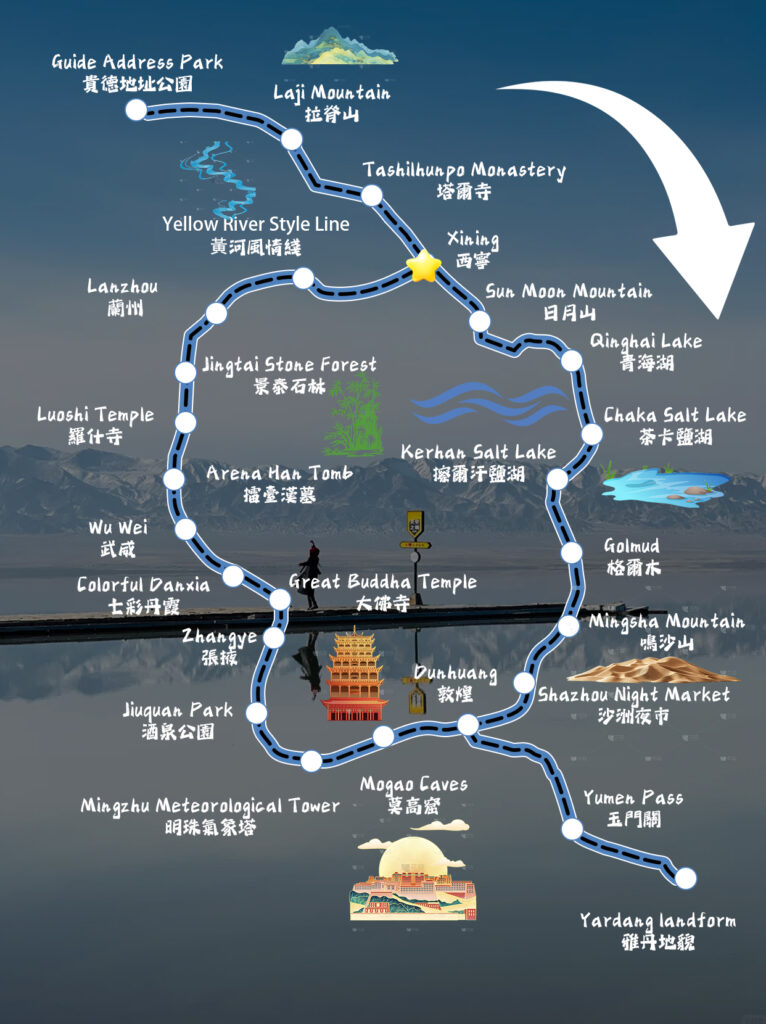
Included/Exclude
Cost Includes
- Pick and Drop Services
- Meals Included in the Itinerary
- Travel Insurance
- Admission Tickets
- Tour Guide Service
- Provide free drone photography service
- 4-Diamond Comfort Hotel
Cost Excludes
- Chinese Visa
- Flight Tickets
- Single Room Supplement
- Meals Not Specified in the Itinerary
Trip Info
-
4 Star Hotel
-
Availability
-
Availabe
-
4188m
-
Bilingual Tour Guide
-
Chinese, English
-
VISA, Master Card
-
Private Chauffeur Car for Travel
-
Available
Why go?
Set off from Xining to visit Ta’er Monastery, then head to Qinghai Lake and Chaka Salt Lake. Traverse Golmud to reach Dunhuang, explore Mingsha Mountain and the Mogao Grottoes, then continue to Jiayuguan Pass and Zhangye Danxia National Geopark (Colorful Danxia). Travel to Leitai Han Tomb in Wuwei and the Yellow River scenic belt in Lanzhou, before finally returning to Xining to round off the trip—along the way, you’ll feast your eyes on the spectacular wonders of lakes, salt lakes, grottoes and Danxia landforms.
Tour Highlights
- Holiday with friends & family.
- As many activities & excursions as can be fitted in to your trip.
- Go any day of the week and most times of the year.
Tour Plan
Upon arriving at Xining Airport, professional pick-up staff will already be waiting, holding a sign with your name and greeting you warmly. They will then take you to the hotel for check-in, where you can rest briefly to relieve travel fatigue.
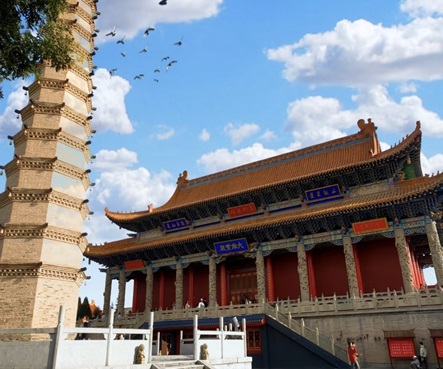
Later, you will travel by car to Ta'er Monastery (including first-entry ticket + scenic shuttle; visit duration: about 2 hours and 30 minutes). As the birthplace of Master Tsongkhapa, the founder of the Gelugpa sect of Tibetan Buddhism in China, Ta'er Monastery was first built in 1379 AD, with a history of over 600 years and covering an area of more than 600 mu (about 40 hectares). The monastery buildings are distributed along a gully and the slopes on both sides of Lianhua Mountain, with halls and pavilions arranged in scattered heights, complementing each other and presenting a magnificent momentum.
Located at the center of the monastery, the Great Golden Tile Hall—with green walls and golden tiles, brilliant and splendid—is the main building of the monastery. It forms a grand architectural complex with other structures including the Small Golden Tile Hall (Dharma Protector Hall), Great Scripture Hall, Maitreya Hall, Sakyamuni Hall, Yigu Hall, Manjushri Bodhisattva Hall, Great Lhasa Palace (Auspicious Palace), Four Great Colleges (Exoteric Buddhism College, Esoteric Buddhism College, Medical College, Ten Wheels College), Butter Sculpture Garden, Mask Dance Garden, Living Buddha's Residence, Eight Sakyamuni Pagodas, Bodhi Pagoda, Gateway Pagoda, Kalachakra Pagoda, and monk dormitories. The complex is well-proportioned, rigorously laid out, uniquely styled, and integrates Han and Tibetan architectural techniques. The Buddha statues inside the halls are vivid, elegant, and transcendently sacred. The lifelike butter sculptures, colorful murals, and brilliant appliqué art are hailed as the "Three Art Treasures of Ta'er Monastery."
Subsequently, you will visit Mojia Street Food Street (visit duration: about 2 hours). It is a paradise for food lovers, with a dazzling variety of local snacks. You can taste Qinghai Liangpi (cold rice noodles)—smooth and chewy, tossed with spicy and sour condiments that bring full satisfaction with each bite. There is also Qinghai Gai Mianpian (hand-pinched small noodles)—handmade noodles served in delicious soup with rich side dishes, full of fresh and savory flavor. While savoring the food, you can feel the lively daily atmosphere of Xining, bringing the first day's journey to a perfect close. Afterwards, return to the hotel to rest and recharge, preparing for the wonderful subsequent itinerary.
After breakfast, you will pass by Riyue Mountain on the way. As a crucial geographical boundary in China, it marks the junction of Huangyuan and Gonghe counties. It serves as the dividing line between China's external and internal drainage basins, monsoon and non-monsoon regions, the Loess Plateau and the Qinghai-Tibet Plateau, as well as the agricultural and pastoral areas of Qinghai. With an altitude of 3,520 meters, it is a must-pass for travelers entering the Qinghai-Tibet Plateau, hence known as the "Screen of the West Sea" and "Gateway to the Grassland."
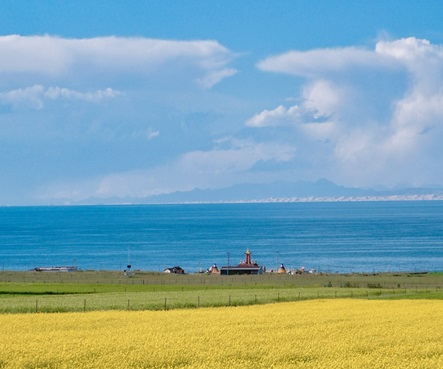
Upon arrival at Erlang Sword Scenic Area of Qinghai Lake (visit duration: 2 hours and 30 minutes; including first-entry ticket), you will encounter China's largest inland lake and largest saltwater lake. The pure, deep, gentle and elegant lake water carries ancient and beautiful legends, as well as Princess Wencheng's longing. It is so magnificent and imposing. Strolling along the lakeside, holding a touch of morning glow in your heart and a wisp of bright gesang flowers in your hand, you can let go of the past and embrace the peace of a clear mind.
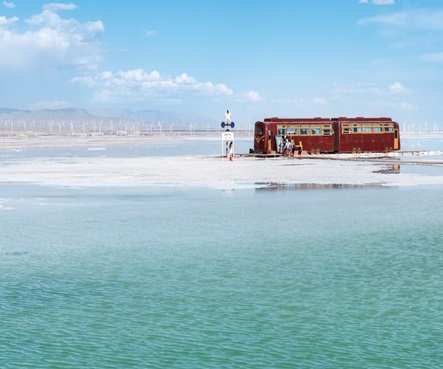
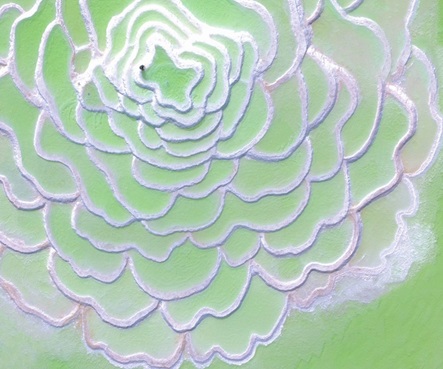
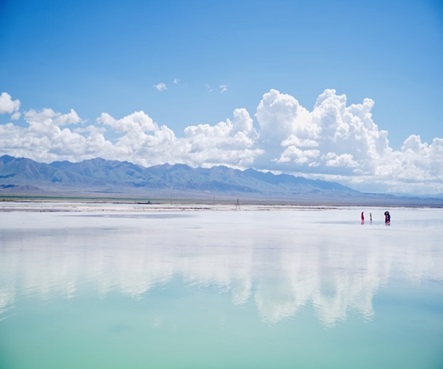
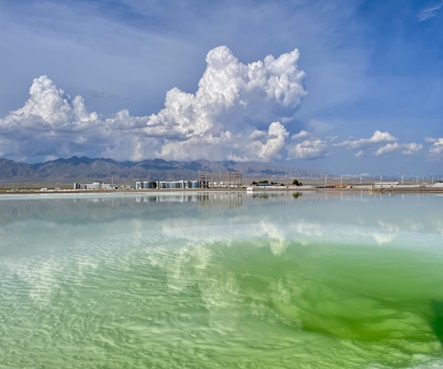
Caka Salt Lake (including first-entry ticket + scenic shuttle; driving distance: 200km, 2 hours and 5 minutes; visit duration: about 2 hours and 30 minutes) awaits like a dreamland ahead. Like a "sky mirror" on the earth, the clear lake water reflects the azure sky, blending water and sky into an indistinguishable whole. Every inch of the lake surface seems enchanted, mirroring the floating clouds in the sky and the outlines of distant mountains. Walking here is like stepping into a fairyland in the clouds—every step is a blend of emptiness and poetry. Time seems to stand still here, leaving only inner peace and deep awe for this natural wonder.
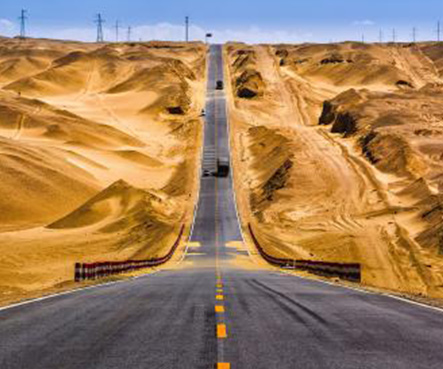
Embark on a dreamlike journey by car to Golmud. It is a romantic date with breathtaking scenery, and one of the highlights along the way is the picturesque internet-famous check-in spot. After the visit, continue by car to Qarhan Salt Lake (including first-entry ticket + scenic shuttle; visit duration: about 2 hours). As China’s largest salt lake and the world’s second-largest, Qarhan Salt Lake is located in Golmud City, Haixi Mongolian and Tibetan Autonomous Prefecture, in the central-eastern part of the Qaidam Basin, with geographical coordinates ranging from 36°21'N to 37°20'N latitude and 94°10'E to 96°03'E longitude.
The salt lake is divided into four lake areas from west to east: Bieletan, Dabuxun, Qarhan, and Hobson. With an altitude of 2,675 meters to 2,680 meters, it stretches approximately 140 to 160 kilometers east-west and 25 to 50 kilometers north-south, covering a total area of 5,856 square kilometers. Bid farewell to this enchanting emerald fairyland—though your body and mind may feel slightly tired after being baptized by the beautiful scenery along the way, your heart will be filled with joy and satisfaction.
Warm Tips
Sunscreen Supplies: The local area has a high altitude and strong ultraviolet (UV) rays. Bring high-SPF sunscreen, sunscreen spray, sun hat, sunglasses, sun-protective clothing, and other items to prevent sunburn.
Warm Clothing: The plateau region has a large temperature difference between day and night. Even if it is hot during the day, the temperature may be low in the evening and early morning. It is recommended to carry warm clothing such as waterproof jackets, thin down jackets, and thermal underwear.
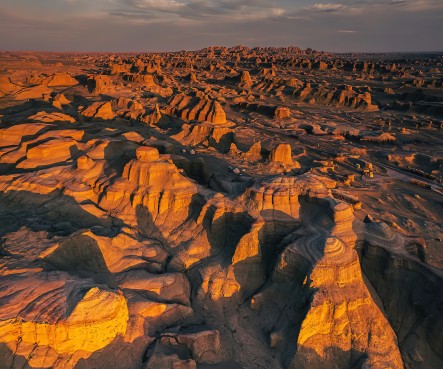
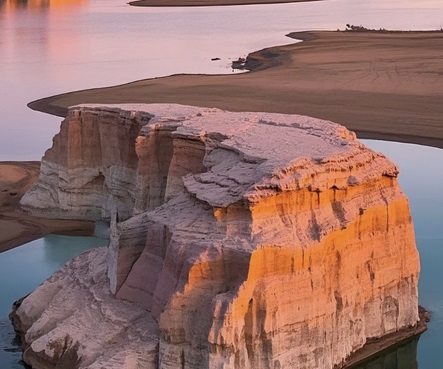
Sandproof Equipment: The Water Yardang area has strong winds and sand. It is best to prepare camera UV filters (for sand protection), waterproof phone pouches, and plastic shoe covers to keep electronic devices and shoes free of sand.
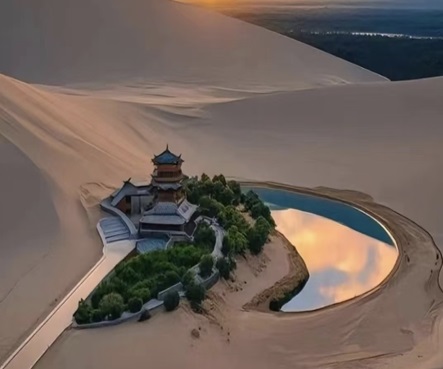
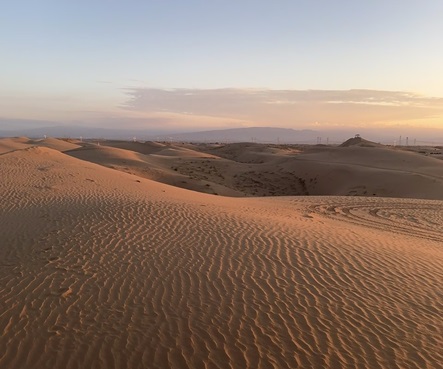
After breakfast, take a bus to Mingsha Mountain and Crescent Moon Spring (visit duration: 120 minutes; including first-entry ticket, camel riding, and scenic shuttle). Located 5 kilometers south of Dunhuang City, Gansu Province, the scenic area covers a total area of 76.82 square kilometers, with the core scenic area defined as 12.79 square kilometers, hailed as "one of the finest scenic spots beyond the Great Wall."
Mingsha Mountain and Crescent Moon Spring are world-famous for their unique coexistence of sand and spring, sand and water. For thousands of years, they have formed a wonderful landscape in the vast desert. Known as Shajing (Sand Well) in the Han Dynasty, Yaoquan (Medicine Spring) in the Tang Dynasty, and officially named Crescent Moon Spring in the Qing Dynasty, it has been a tourist resort since the Han Dynasty. In July 1988, the scenic area was brought under government management and protection; in February 1989, it was listed as a "municipal-level scenic spot" and has become one of Dunhuang’s iconic landmarks. In 2015, it was rated as a national 5A-level tourist attraction and is part of the Dunhuang World Geopark of China.
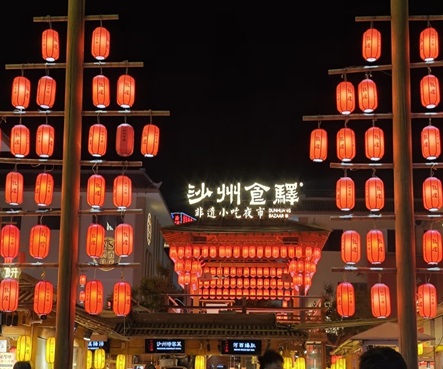
After the visit, proceed by bus to Shazhou Night Market. Located on East Yangguan Road, it is the largest night market in Dunhuang City and has gained increasing popularity among Chinese and foreign tourists. As night falls and lights illuminate the area, tourists from all over China and the world gather at this brightly lit night market, making it extremely lively. The night market consists of five business districts: local snacks, handicrafts, "Three-Cup Tea" stalls, agricultural by-products, and local specialties. With distinct local characteristics and rich folk customs, it is praised as Dunhuang’s "night view picture" and "customs painting." After the visit, take a bus back to the hotel to rest.
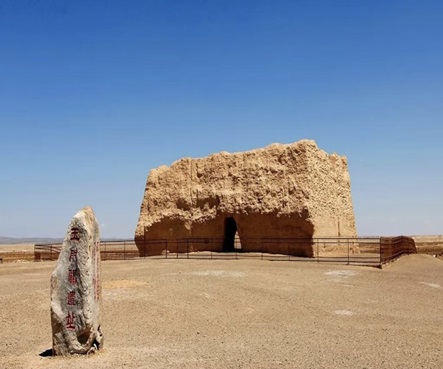
Caressed by the gentle morning glow in downtown Dunhuang, we set off with full anticipation from this ancient city steeped in historical charm, heading to Yumen Pass by car (visit duration: 60 minutes; including first-entry ticket and scenic shuttle). Yumen Pass (English name: Yumen Pass; also known as Xiaofangpan City) was established in the third year of Yuanshou during Emperor Wu of Han’s reign (108 BC). It was a key pass on the ancient Silk Road of China and a historical relic from the Han Dynasty.
Located on the southern bank of the Shule River at the westernmost end of the Hexi Corridor, the Yumen Pass site is about 90 kilometers northwest of Dunhuang City and approximately 150 kilometers east of the eastern edge of Lop Nur. The core area of the site is linearly distributed around the Xiaofangpan City ruins, stretching 45 kilometers east-west and 0.5 kilometers north-south. The moment you step into the scenic area, it feels as if you have stepped into the river of history. In front of the statue of Wang Wei, we can’t help but recite his famous line "West of Yangguan, no old friends remain"—the profound sorrow of parting, spanning thousands of years, still touches our hearts deeply. At this moment, the emotions of the ancients connect closely with us, allowing us to gain a deeper understanding of this sincere friendship.
Subsequently, we visit Yangguan Post, ancient-style military camps, and Yangguan pottery kilns. Each scenic spot is like a vivid historical painting, fully displaying the profound historical charm of Yangguan. Here, we can also experience horse riding and camel riding, as if transforming into ancient travelers advancing in the vast desert. Obtaining a "pass document" immerses us in the sense of ritual and solemn atmosphere of exiting the pass in ancient times.
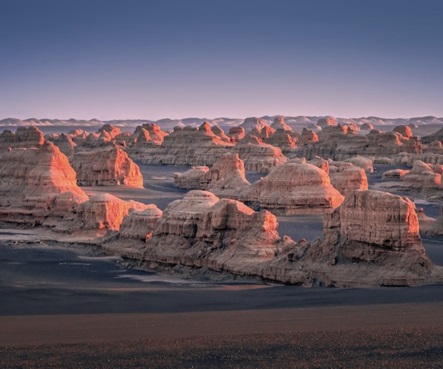
Next is Yadan Devil City (visit duration: 90 minutes; including first-entry ticket). Officially known as Dunhuang Yadan National Geopark, it is commonly called Dunhuang Yadan Devil City. As one of China’s three most beautiful Yadan landforms, it is an important part of the Dunhuang World Geopark of China. The Dunhuang Yadan landform is the largest, most mature in geological development, and most valuable for viewing among all Yadan landform groups discovered in the world so far. After the visit, take a bus to the hotel for check-in and rest.
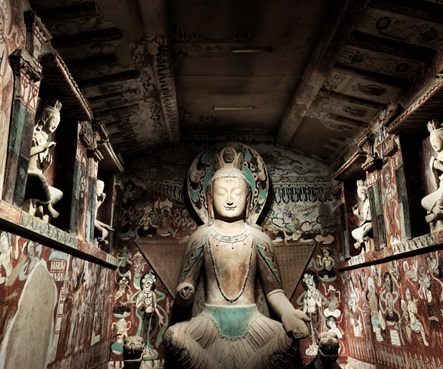
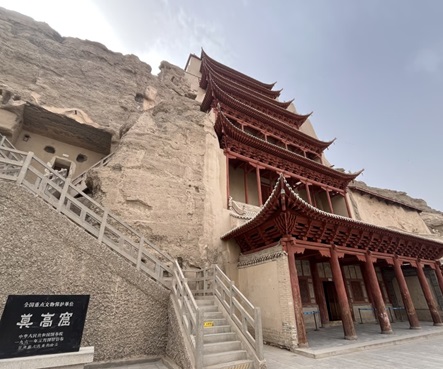
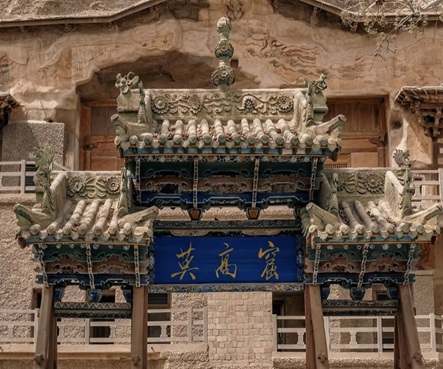
After breakfast, take a bus to Mogao Grottoes (visit duration: 120 minutes; including Category B ticket). Mogao Grottoes, a representative group of Dunhuang Grottoes in China, is also a treasure trove of Buddhist art, hailed as the "Pearl of the Silk Road" and "Pearl of Eastern Art." Also known as the Thousand Buddha Grottoes, it is located on the cliff at the eastern foot of Mingsha Mountain, 25 kilometers southeast of Dunhuang City, Gansu Province.
Famous worldwide for its painted sculptures and murals, Mogao Grottoes showcases Buddhist art spanning a thousand years and records the historical facts of cultural exchanges between China and foreign countries. It provides valuable materials for the study of ancient Chinese society from the 4th to the 14th century. Together with Yungang Grottoes in Datong, Shanxi Province, and Longmen Grottoes in Luoyang, Henan Province, it is known as one of China’s "Three Great Treasure Troves of Stone Carving Art."
Later, take a bus to Pearl Meteorological Tower (visit duration: 60 minutes; including first-entry ticket). Located 200 meters east of the intersection of Hecheng East Road and Xinhua South Road, within Jiayuguan East Lake Ecological Tourism Scenic Area in Jiayuguan City, Gansu Province, it is China’s first popular science meteorological station. Integrating meteorological observation, meteorological science popularization, and sightseeing, it is a landmark building of Jiayuguan.
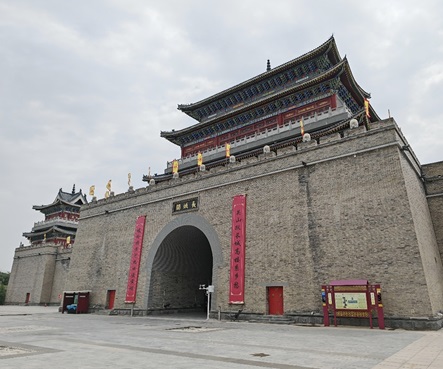
Jiayuguan Pass Tower (visit duration: 90 minutes; including first-entry ticket)Jiayuguan, also known as "the Most Majestic Pass Under Heaven" and "the First Pass of Hexi Corridor," was first built in the 5th year of Hongwu in the Ming Dynasty (1372 AD). Composed of an inner city, outer city, Luocheng (screen wall city), Wengcheng (barbican), moat, and the Great Wall on the north and south wings, it stretches for approximately 60 kilometers. Located in the middle of the narrowest valley 5 kilometers west of Jiayuguan City, Gansu Province, the city walls on both sides of the pass run through the desert and Gobi, connecting the Black Mountain Suspended Great Wall to the north and the First Pier Under Heaven to the south.
After the visit, take a bus to Jiuquan Park (visit duration: 60 minutes; including first-entry ticket). Situated in Suzhou District, Jiuquan City, Gansu Province, Jiuquan Park is a classical garden rooted in the historical facts of the Western Han Dynasty, embodying the grandeur of the Han Dynasty and integrating the elegance of the Jiangnan region.History: With a history of over 2,000 years, Jiuquan Park gets its name from the Jiuquan (Wine Spring) within the garden. According to legend, in the 2nd year of Yuanshou in the reign of Emperor Wu of Han (121 BC), General Huo Qubing led an expedition against the Xiongnu in the west and achieved a great victory here. Emperor Wu rewarded him with imperial wine. Considering the merit belonged to the entire army but the wine was insufficient for all soldiers, Huo Qubing poured the wine into the spring and shared it with his troops—hence the name "Jiuquan (Wine Spring)."
Take a bus to Big Buddha Temple (visit duration: 60 minutes; including first-entry ticket). Zhangye Big Buddha Temple is located in the urban area of Zhangye City. First built during the Yong'an period of the Western Xia Dynasty, it has a history of over 900 years. The temple is famous for enshrining one of the largest indoor clay reclining Buddha statues in China. In addition, there are ancient buildings with unique features such as pagodas and the Shanxi Guild Hall, which can be visited and paid homage to. The temple also has exhibitions to help visitors understand Buddhist art and the history of the Big Buddha Temple. It is one of the iconic scenic spots in Zhangye.
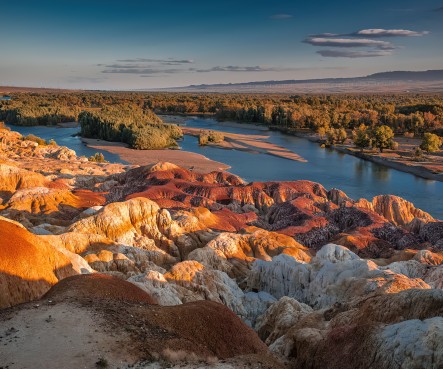
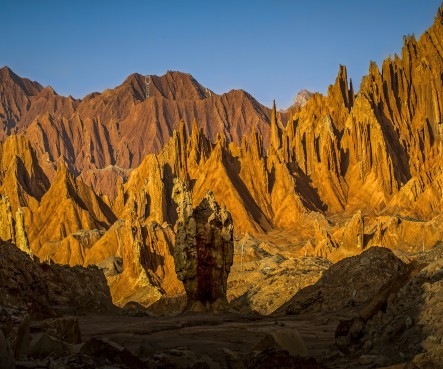
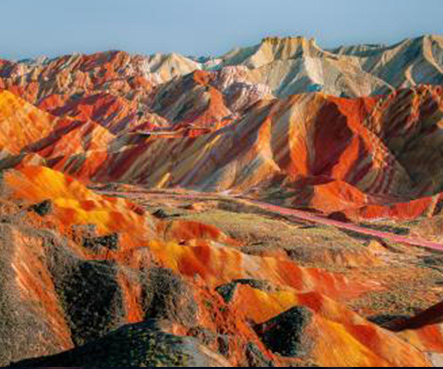
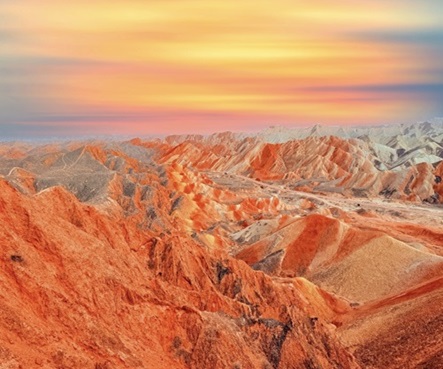
Then take a bus to Colorful Danxia (visit duration: 120 minutes; including first-entry ticket and internal transportation). The Colorful Danxia Scenic Area is located in Linze and Sunan counties, Zhangye City, Gansu Province. It is a national 5A-level tourist attraction and a world geopark. Covering a total area of 50 square kilometers, the scenic area is 40 kilometers east of downtown Zhangye and 20 kilometers north of Linze County seat. It is the most typical Danxia landform developed in arid areas of northern China and the only area in China where Danxia landform and colorful hilly landscapes are highly integrated.
If you visit Danxia, you should appreciate its majestic momentum, spectacular scenes, peculiar shapes and gorgeous colors. "Travel far to attend the splendid feast of the world, just to witness the sunset shining on Danxia" — who splashed cinnabar to form the beloved fault lines? Who used colorful brushes to paint the oil-like paintings? It is the most proud color of the Hexi Corridor. Nature is the best sculptor, and it is also the only complex of Danxia landform and colorful hills. Climate changes over hundreds of millions of years have formed this colorful world, where "flowers bloom in stones" and different colors appear at different times.
Take a bus to Leitai Han Tomb (visit duration: 80 minutes; including first-entry ticket). Located at No. 272 Beiguan Middle Road, Liangzhou District, Wuwei City, Gansu Province, Leitai Han Tomb was built around the late Eastern Han Dynasty and is famous for unearthed the "Flying Horse Treading on a Swallow"—China’s tourism symbol. Leitai was a place for worshipping the God of Thunder in ancient times. It was originally Lingjun Terrace built by Zhang Mao, King of the Former Liang Dynasty (301–375 AD), and got its name because the Leizu Temple, constructed during the Tianshun period of the Ming Dynasty, stands on a 10-meter-high rammed earth mound. According to the inscriptions on the chests of the horse figurines, Leitai Han Tomb is the tomb of "Zhang Jun, the Governor of Zhangye," dating back to around 186–219 AD. As large-scale brick-and-stone tombs, both tombs are built under the rammed earth mound (Leitai). Tomb No. 1 is a joint burial tomb for a couple with a high specification. Facing east, it consists of a long sloping tomb passage, corridor, front chamber (with left and right side chambers), middle chamber (with a right side chamber), and back chamber, including a main bedroom and an auxiliary chamber. Above the tomb door stands a brick-carved memorial archway. The total length of the tomb is 19.34 meters, built with strip bricks, featuring a bucket-shaped ceiling and caisson square bricks painted with large lotus patterns. Tomb No. 2 is similar in structure to Tomb No. 1 but smaller in scale and without side chambers.
After the visit, take a bus to Kumarajiva Temple (including first-entry ticket + scenic shuttle; visit duration: 60 minutes). Officially named Kumarajiva Temple, it is located on North Street, Liangzhou District, Wuwei City, Gansu Province. First built during the Later Liang period of the Eastern Jin Dynasty (386–403 AD), it is the place where Kumarajiva, a great Chinese Buddhist scripture translator, resided for 17 years when he entered inland China, boasting a history of over 1,600 years. In 1998, the former Wuwei Municipal People’s Government approved the restoration of Kumarajiva Temple at the request of the Wuwei Buddhist Association. In 1999, it was officially opened as a Buddhist activity site with the approval of the Gansu Provincial Religious Affairs Bureau. The initial planned area of Kumarajiva Temple was 32.8 mu, which was adjusted to 102.4 mu in 2009. Now it has completed constructions including the Mahavira Hall, Kumarajiva Pagoda, Kumarajiva Library, east and west wing rooms, Kumarajiva Memorial Hall, Guanyin Hall, west auxiliary hall, tourist center, east mountain gate, and Medicine Buddha Hall. It was rated as a national AAAA-level tourist attraction in 2009 and upgraded to a national AAA-level scenic spot in 2019, now becoming a core scenic spot on the city’s historical and cultural tourism route.
Later, take a bus to Jingtai Stone Forest (visit duration: 90 minutes; including first-entry ticket and scenic shuttle). Also known as the Yellow River Stone Forest, it is adjacent to the Longwan meander of the main Yellow River to the north and continuous eroded hills to the south. Composed of orange-yellow glutenite, it is a comprehensive geopark integrating geomorphology, geological structure, natural landscapes, and human history.
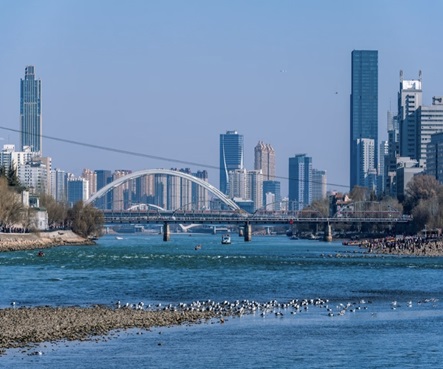
After breakfast, take a bus to Yellow River Scenic Belt (visit duration: 2 hours and 20 minutes). As the core scenic area of Lanzhou City, Gansu Province, the Yellow River Scenic Belt stretches along the north and south Binhe Roads for more than 100 li (about 50 kilometers), starting from Yantan in Chengguan District in the east and ending at Xigu District in the west. It is the longest urban riverside road in China. Centered on the Zhongshan Bridge, the scenic belt takes the scenery on both banks of the Yellow River as the "Lanzhou Bund". After the visit, take a bus to the hotel for check-in and rest.
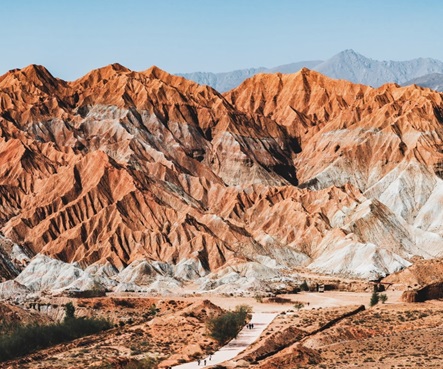
After breakfast, take a bus to Guide Ashigong National Geopark (including first-entry ticket + scenic shuttle; approximately 70 kilometers, driving time: about 1 hour and 20 minutes; visit duration: about 2 hours). Located by the Yellow River northeast of Guide County, Hainan Tibetan Autonomous Prefecture, the geopark is about 70 kilometers away from downtown Xining by car. Famous for its colorful Danxia landforms, the park features bright and varied Danxia formations that are extremely spectacular, making it an ideal spot for shooting photography works.
Subsequently, visit Mojia Street Food Street (visit duration: about 2 hours). It is a paradise for food lovers, with a dazzling array of local snacks. You can taste Qinghai Liangpi (cold rice noodles)—smooth and chewy, tossed with spicy and sour condiments that bring full satisfaction with each bite. There is also Qinghai Gai Mianpian (hand-pinched small noodles)—handmade noodles served in delicious soup with rich side dishes, full of fresh and savory flavor. While savoring the food, you can feel the lively daily atmosphere of Xining, bringing the first day's journey to a perfect close. Afterwards, return to the hotel to rest and recharge for the wonderful subsequent itinerary.
Please proceed to the airport/train station to complete the check-in/boarding procedures according to your return flight/train information, then take the flight/train back home, bringing this pleasant journey to an end. A driver will be arranged to take you to the airport/train station based on your flight/train schedule. We look forward to meeting you again!!!
Included/Exclude
Cost Includes
- Pick and Drop Services
- Meals Included in the Itinerary
- Travel Insurance
- Admission Tickets
- Tour Guide Service
- Provide free drone photography service
- 4-Diamond Comfort Hotel
Cost Excludes
- Chinese Visa
- Flight Tickets
- Single Room Supplement
- Meals Not Specified in the Itinerary
Frequently Asked Questions
We will offer you the most favorable price based on your itinerary and destination! Whether it’s an impromptu short-distance getaway nearby, a long-haul in-depth tour across mountains and seas, a family-friendly vacation with your loved ones, or a team-building trip with your colleagues, we will provide a precise quote tailored to your unique needs. We reject hidden costs and tricky discount schemes, and with transparent pricing and premium services, we help you fulfill a cost-effective travel dream.
From the moment you inquire about the itinerary until the successful conclusion of your journey, our professional team will be dedicated to providing you with the highest-quality service. Whether it comes to route planning, hotel selection, dining arrangements, seamless transportation connections throughout the trip, or emergency support, we will adhere to meticulous service standards and professional protocols to create a tailor-made, worry-free travel experience for you, ensuring every moment of your journey is filled with peace of mind and joy.
We craft tailor-made journeys with professional expertise and fulfill wonderful travel memories with premium services. From itinerary planning to round-the-clock support, we focus on every single detail, dedicated to delivering a comfortable, reassuring and satisfying travel experience that exceeds your expectations.