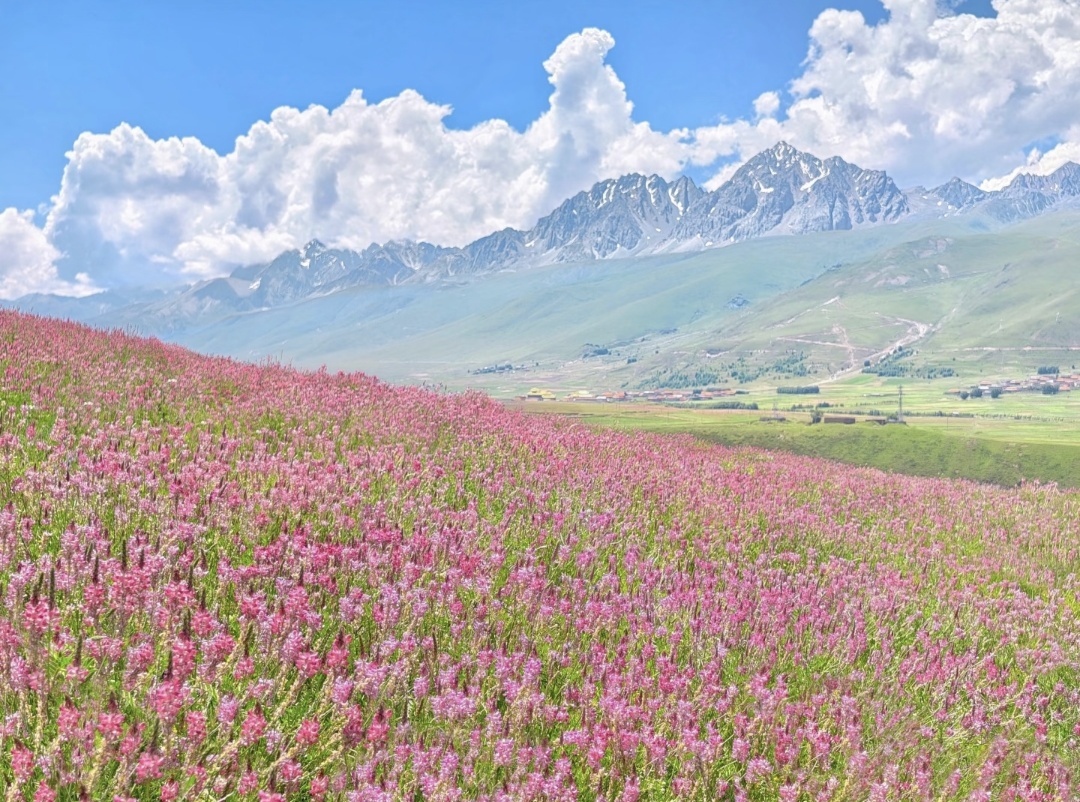
I traverse mountains, wander along rivers, and circle prayer stupas — not for a better afterlife, but to meet the sunset glow of Western Sichuan along the way.
In Western Sichuan, the sunrise is like a lamp held aloft by snow-capped mountains. Flip the switch, and golden rays cascade all the way from the mountain peaks to the valley floors. Frost still lingers underfoot from the wee hours of the morning, yet in the blink of an eye, it is kissed by sunlight and glitters like scattered diamonds. Yaks’ eyelashes are coated with ice crystals, but the mist they exhale carries the fresh scent of grass. Your phone is down to just the battery icon, with not a single bar of signal left—anxiety feels like something you left behind in the city. Standing in the thin air 4,000 meters above sea level, you hear your heartbeat keeping time with the wind: thump, whoosh—so this is what high-altitude feels like; turns out the plateau’s metronome is simply the lack of oxygen.
Four Girls Mountain
Known as the Alps of the East, its four snow-capped peaks stand shoulder to shoulder above the clouds. Ride a horse through the primeval forest in Changping Valley, where snow mountain reflections shimmer on the Dead Tree Shoal. At the end of the plank road, Mount Yaomei rises abruptly, its silver peaks blazing under the dazzling sunlight. In Shuangqiao Valley, the larch forests blaze with riotous autumn hues. Grab a cup of coffee at the Potala Peak Observation Deck, with glaciers as your backdrop—the highland wind slows your heartbeat to a gentle, lingering rhythm.
Daocheng Yading
Hailed as “the last pure land on the blue planet”, it is embraced by snow-capped mountains and forests. Wander slowly along the horse trail: Mount Yangmaiyong juts into the clouds like a sharp sword; Milk Lake shimmers with an opalescent glow under the sun; Five-Color Lake shifts through endless shades with the sky, painting a new scene at every step. Return to Luorong Pasture at dusk—sunset blazes gold and crimson across the three sacred mountains, and the tinkle of yak bells drifts on the wind at 4,000 meters above sea level, as if beating your heartbeat into the plateau’s eternal embrace.
Moshi Stone Forest Park
Step into its bubble-like black stone forest, and you’ll feel like wandering onto a Mars relic. Wind-carved, ink-gray rock faces take the shapes of blades and watchtowers, glinting coldly in the sunlight. Stand beneath the “Alien Planet” sign in a trench coat—no filters needed for a sci-fi poster-perfect drone shot. Walk out of the valley at dusk, and the sight of smoke curling from Tibetan pastoral houses against the dark stone landscape will teleport you straight back to Earth in an instant.
Huanglong
Take the cable car up to 3,600 meters, where thousands of travertine pools cascade down the mountainside like a tipped palette—layers of sapphire blue, canary yellow, and pine green stretching as far as the eye can see. Sunlight dances on the water’s surface, casting shimmering golden ripples. Wander along the plank roads, breathing in the crisp, fir-scented mountain air. As you descend, glance back—the colorful pools twist and turn like a coiling dragon, nestled beneath the snow-capped peaks.
Jiuzhaigou Valley
Take a sightseeing bus directly to Rize Valley. Bamboo Lake mirrors the lush green mountains and forests, while Nuorilang Waterfall cascades down from the woods like a hanging white silk ribbon. The Colorful Pool lies serenely in the heart of the travertine landscape, its waters shimmering in a stunning blend of peacock blue, turquoise green and amber yellow all at once. In autumn, the hillsides are blanketed by forests ablaze with fall foliage. The lake surface acts like a mirror, folding the hues of all four seasons into a single frame—every snapshot you take here feels like a page torn straight from a fairy tale.
Recommended Delicacies in Western Sichuan
Yak Meat Hot Pot :A hearty hot pot with a rich broth simmered from yak bones and plateau herbs. Slice tender yak meat (often with skin) and wild mushrooms to simmer, then savor the umami-packed soup first for an authentic plateau flavor.
Beef with Crust :Sautéed yak meat and potatoes are braised in an iron pot, topped with a crispy yet fluffy barley flour crust that soaks up the savory juices, creating a satisfying carb – meat combo.
Tsampa :A staple Tibetan food made from roasted highland barley flour. Knead it into small balls with butter tea or barley wine for a filling, energy – boosting snack ideal for high – altitude travel.
Western Sichuan Beef Pancake :A crispy street snack—minced yak meat seasoned with Sichuan peppercorns and green onions is wrapped in thin dough, then pan – fried in yak butter until golden and juicy.
Pine Mushroom Stewed Chicken :Slow – simmer free – range Tibetan chicken with fresh wild pine mushrooms. The broth is incredibly flavorful, with a perfect blend of earthy mushroom notes and tender chicken.
Best Time to Visit Western Sichuan
Spring (March–May)From March to April, pear blossoms burst into full bloom in Jinchuan. Come May, peach and plum blossoms compete for attention across Danba. As temperatures gradually warm up, this is the perfect window for flower viewing and capturing idyllic rural scenery. However, weather in Western Sichuan is highly changeable in spring, with significant temperature differences between day and night—be sure to pack warm clothing.
Summer (June–August)This is Western Sichuan’s rainy season, yet also the time when grasslands are at their lusher best. Zoige Grassland and Hongyuan Grassland are carpeted with lush green grass and dotted with wildflowers everywhere. Summer is also ideal for lake sightseeing; Jiuzhaigou’s waters glow in a kaleidoscope of colors under the sun. Note that summer is peak tourist season, meaning larger crowds. Additionally, travel during the rainy season requires caution against natural disasters like mudslides and landslides.
Autumn (September–November)Widely regarded as the absolute best time to visit Western Sichuan. Starting from late September, the region’s leaves turn to vibrant hues, creating a spectacular sea of colored forests. Daocheng Yading is breathtakingly beautiful in autumn—snow-capped mountains, alpine meadows, forests and lakes set against the backdrop of colorful foliage combine to form a stunning picture. The weather is clear and pleasant, with fresh air and excellent visibility, making it perfect for landscape photography. Don’t forget to bring warm layers though.
Winter (November–February next year)Western Sichuan’s winter scenery is nothing short of stunning, with the land blanketed in snow and snow-capped mountains appearing even more majestic. That said, some high-altitude scenic spots may be closed, such as the long hiking trails in Daocheng Yading.
Recommended Winter Attractions
Hailuogou: Admire the breathtaking views of glaciers and snow-capped mountains, and unwind in hot springs—enjoy the dual pleasure of warmth and beauty amid the winter chill.
Seda Larung Gar Buddhist Academy: It exudes a unique charm in winter. Thousands of red buildings, covered in a layer of snow, look even more mysterious and solemn.